Panic-buying. Solitary confinement. Laissez-faire. Survival of the fittest.
It’s the first time ever I actually hear the sound of silence on the empty streets of Kuwait at 7pm. Never realized how many dogs were in my neighborhood, until I heard the symphony of barks and howls coming from every corner of my audio periphery. Not a car in sight, streets empty, building lights on all over, you can hear a phone conversation from a balcony 5 blocks down- eerily yet peacefully silent. You’re interrupted only by your own breathing.
This is the result of a quick decision to shut down the airports and apply a 5pm curfew. The last time Kuwait came under such constraints was in the Gulf War of 1990. This time, however, the enemy’s numbers are unknown as they creep around us invisible and silent.
Let’s look at what we know so far.
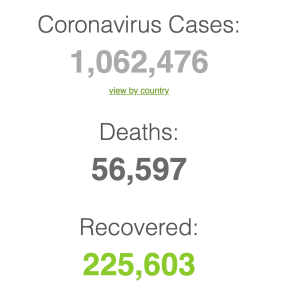

The spread of the virus has been graphed linearly showing exponential growth. With incubation periods ranging from 1-3 weeks, at any point in time, it’s easy to expect the numbers to be waaaay higher than reported.
Here’s what scares Bill- the virus is extremely contagious, based on the numbers above, it seems to have around a 5% death rate on known infections, and often there are no symptoms. This means people have no clue whether they’re infected or not, and will continue to spread it assuming they’re perfectly fine. Now the real problem occurs when those numbers rise and need to be admitted to hospitals. Healthcare workers, equipment, and hospitals are already spread thin, and we don’t think we’re anywhere near the peak yet. We saw what this could mean with the situation in Italy- lots of deaths that could have been avoided had the healthcare system been able to withstand higher capacities. They reached a point where they had to decide who lives and who dies. Who could ever make such decisions? Without a vaccine, our only way of dealing with this is social distancing- working from home, only leaving the house when absolutely necessary, wearing masks out, constantly wash our hands- plus, closing all non-essential businesses and continuous testing of people for infection. Lots of testing. And of course, lockdowns and curfews. Practicing social distancing would decrease and slow the spread of the virus enough for the healthcare industry to be able to manage the numbers. But it seems there’s a trade-off. What happens to business?
Let’s look at how the economy is reacting.

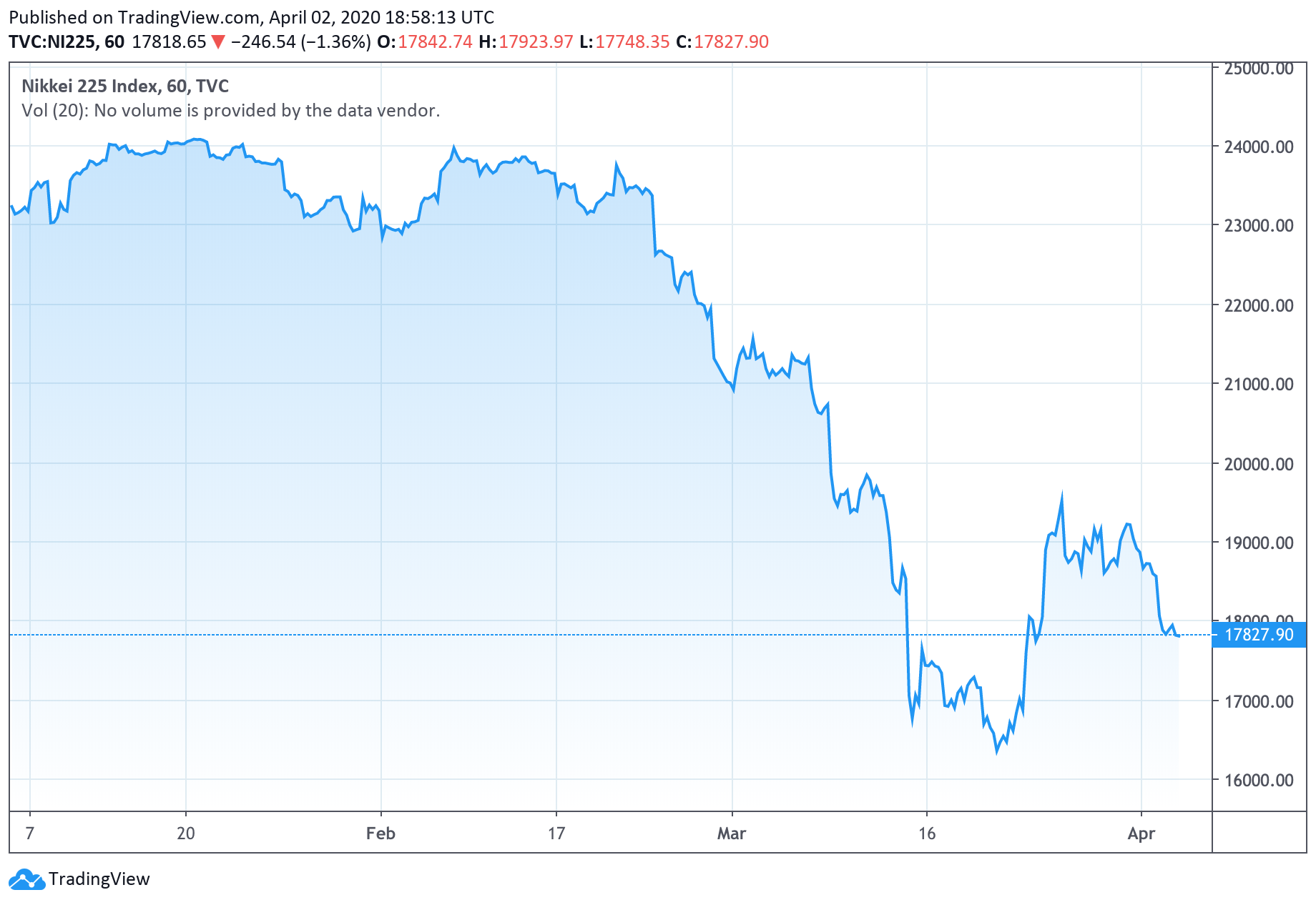


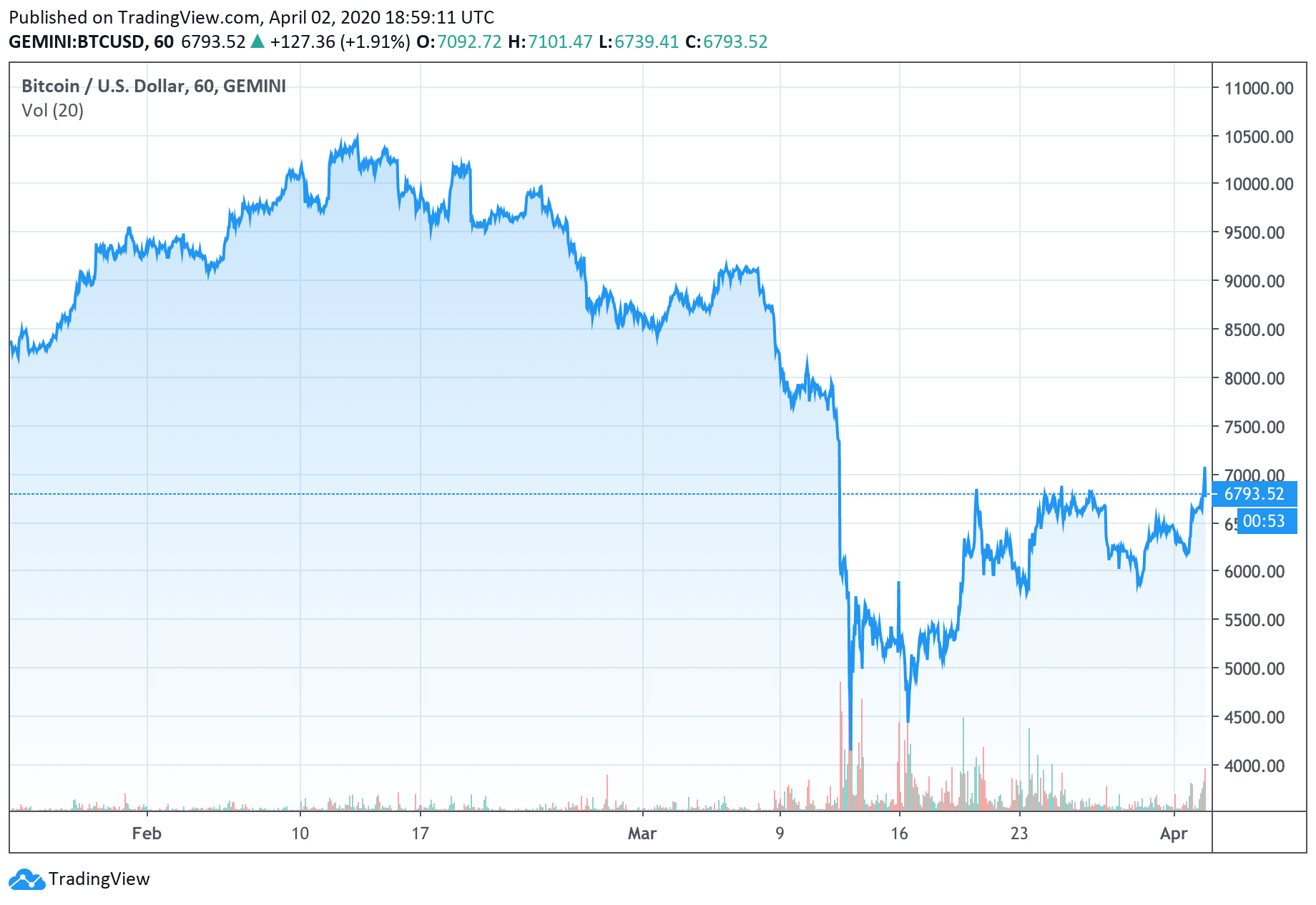
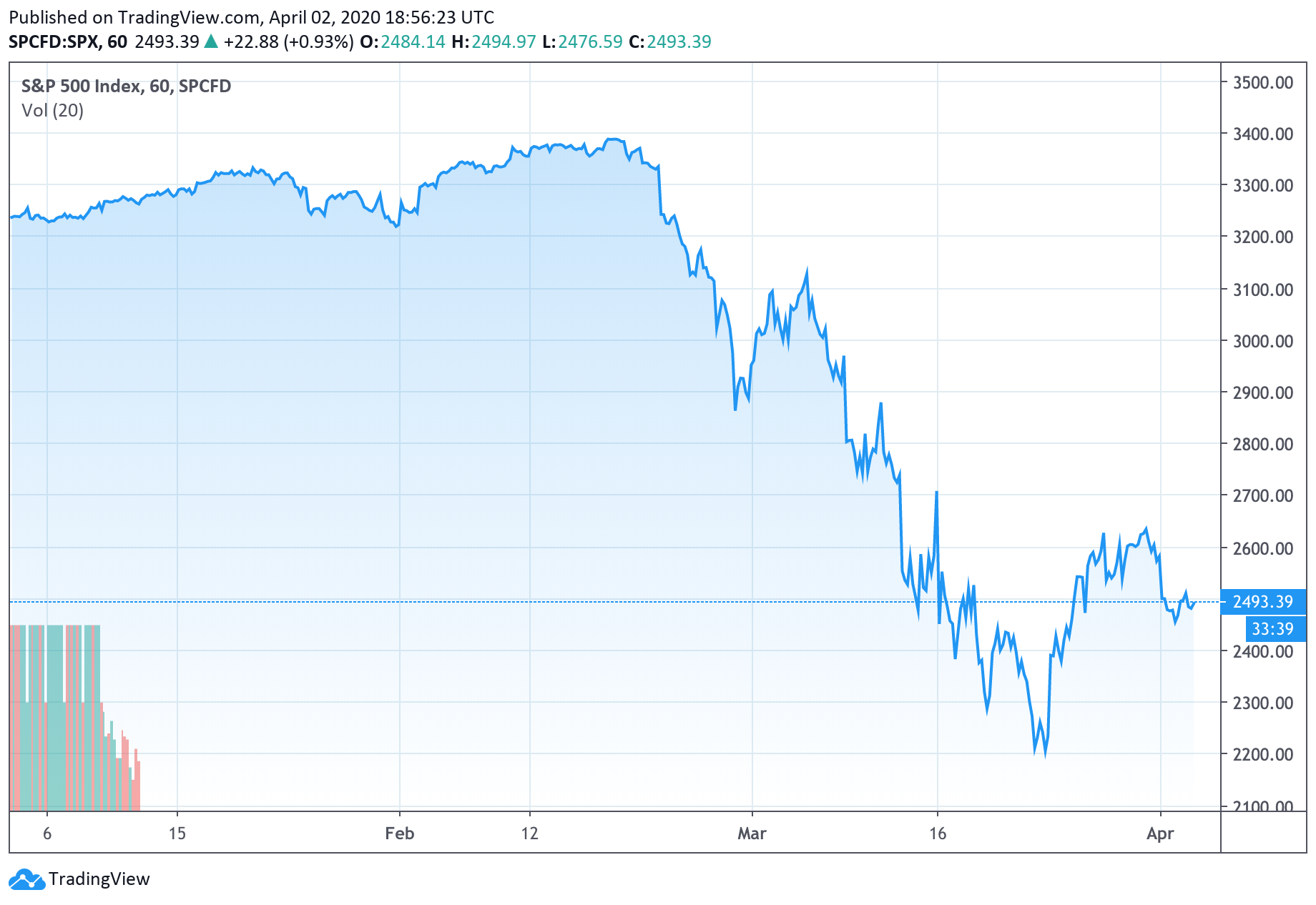
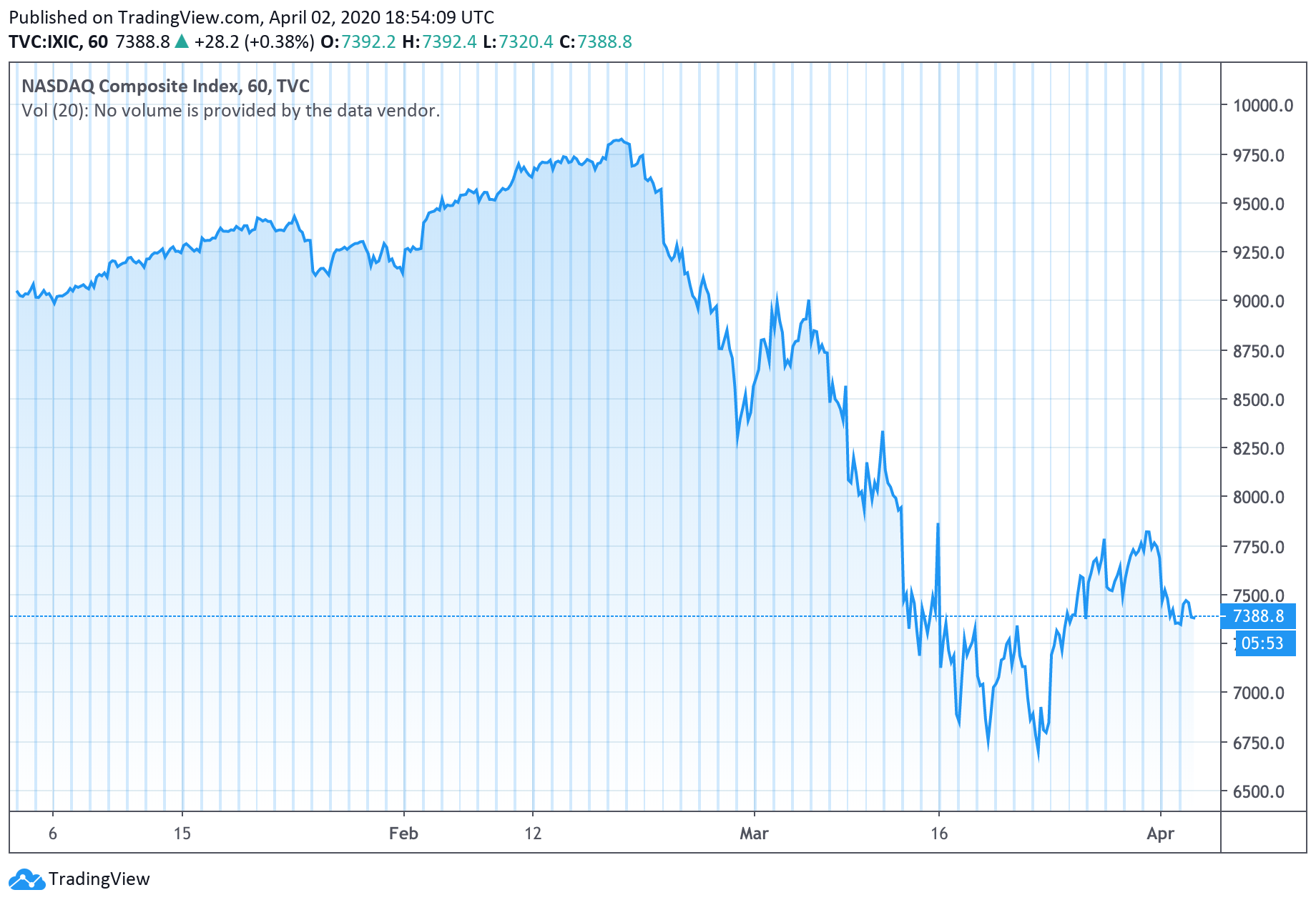
Yes, some charts may be too small, but all we care about is the shape we see across the S&P 500, Nasdaq, Boursa Kuwait, FTSE, Nikkei, Oil, and Bitcoin. Fear-invoking charts.
2.5 billion people around the world are in some sort of lockdown. Government stimulus measures have been proposed across the globe in an attempt to salvage what they can from the carnage of lost businesses, lost jobs, and lost lives. Interest rates are at all-time lows. Unemployment rates are at all-time highs. Recession fears escalated to fears of depression. And the debate rages on, to fear or not to fear?
Here’s what we need to come to terms with: we are in a crisis, this is a declared pandemic. No matter what we do at this point, there will be pain and suffering and loss. Our actions from here on out cannot prevent the pain, it can only affect the extent of it.
There will be considerable physical, social, economic and political consequences. Many SMEs will be decimated. People relying on a paycheck everyday will suffer. This could lead to increases in crime rates and suicides. People will hold as much cash as they can and consumer spending will hang by a thread. The travel, hospitality, and sharing industries will require bailouts or complete turnarounds. Authoritarian powers in government will increase. If the virus mutates, future waves of it could be much more deadly. People will lose lives and livelihoods. Where’s the silver lining?
Let’s reflect on our history a little.
After World War I claimed about 22 million lives, the Spanish flu, considered one of the deadliest pandemics in history, started spreading in 1918 infecting a quarter of the world’s population (yes, a quarter) and killing anywhere from 20-100 million people. The Great Depression started in 1929 and lasted for 10 years wiping out millions of investors and employees. It ended at the start of World War II as millions were drafted for the military – 75 million are estimated to have died in World War II. Back-to-back-to-back years of record losses in both lives and the economy. Yet we survived. Not only did we survive, but we were able to execute some of the greatest feats in the history of humankind. We went further and further into the depths of space and even walked on the moon, we mapped the human genome, we entered an “information age” starring the internet which leapfrogged us into higher intelligence, productivity, and optionality. We brought down poverty and mortality, and increased life spans and bandwidth. There is not one instance in history where we haven’t managed to come out of a disaster or crisis with upgrades. World War II gave us the United Nations, the computer, and better radar. It’s only a matter of time.
Now this does not mean those events did not have a significant effect on people. If you were looking for food during the Great depression, or your brother during WWII, or your money in 2008- you didn’t care that the future was brighter. At that moment all you can feel is a complete sense of loss and despair.
Today, we see a range of reactions to the Coronavirus. We saw the unfathomable panic-buying of toilet paper, the panic-selling in markets, people hoarding food, airports and whole countries shutting down, entire businesses forced to close. We also saw Trump say it’s just a flu, we saw the UK declare 60% of their population will be infected, we saw college students partying in Florida, I was personally coughed on by two people in public (who did not care to wear masks, cover their mouth, nor turn away to do it), friends and families still gather in private, and some people leave their homes as much as they can before curfew. The argument stands between those who claim it’s just a flu (and there are bigger concerns in life), and those who say this is the worst thing to happen to any of us in our lifetimes.
I myself posted on instagram not to panic, I did that while I was already in quarantine. So let me explain how I interpret this debate. When I post on my private instagram page not to panic, I’m addressing “my people”. People I know. I assume my people, like me, will follow guidelines from health officials and governments to stay home, wash your hands, wear a mask, and avoid human contact. I’ve been at home since the beginning of March leaving only about 4 times to get home necessities (now I order them online). If you follow the guidelines, and do everything you can possibly do, YOU SHOULD NOT PANIC. The risk of this affecting me personally is as high as it is for anyone else, yet I won’t worry and panic because I believe in my ability to do the best I can to avoid it. And that’s all I can do about it.
Anyone who understands that they are a tiny part of a much larger whole will want to act in a way that benefits that whole. When you are told you may have it and not know so stay home so you don’t spread or catch it, this should make sense and should convince you to stay home. When you’re told it may not hurt you, but could hurt many others that get infected by you, you should care enough to stay home. When you’re told someone close to you that is immunocompromised could get seriously hurt by this, you should be incentivised to be extra cautious. Once you are extra cautious, there is literally nothing else you can do, so panic has absolutely no role. Panic cripples. I’ll repeat that, panic cripples.
But here’s where I was wrong.
I assumed people listen to government and health officials. I assumed people care about the whole. I assumed people understood. I was wrong.
I got lucky. My mother is a cardiologist, and as part of the healthcare system, is involved and continues to work. I get real updates from her on a regular basis, she told me very early on to stay home, and she’s also immunocompromised – so of course, I listened. Not every home has that though. Many don’t understand the real threat this virus poses to us, and still others don’t seem to care. Sometimes it’s just misinformation, other times it’s neglect. For those people, I suggest strongly that they panic. Because as mentioned, panic cripples, and they need to be crippled into staying home.
This is why many statements made in public ignite panic, because the majority don’t understand or don’t care, and they need to feel fear in order to take things seriously.
In my instagram post, I believe what I wrote was not wrong if my assumption was correct. Panic is harmful for those of us who understand the gravity of the situation. Because it cripples us, and if we already follow the guidelines, then the crippling effect will spread to our productivity. And that’s where the danger lies. We do not want panic to affect our productivity, because the loss of productivity will exacerbate the effect of the virus. Work must go on. It is time to reinvent ourselves, our businesses, and our politics. Panic also leads us to make rash decisions that have future consequences. We should be aware of the hardship the world is going through, without fearing it, as the world needs us now more than ever. We should not predict dystopian futures as that too will affect our productivity. We should just take it as it is. This is a difficult time of which many opportunities will die out, while others will start appearing, and it’s up to each individual to either give-up (panic) or push forward (stay productive). Yes, this virus is a real threat, but we lived with real threats everyday of our lives, it shouldn’t stop us – we should face it.
Fear is our evolutionary response to danger. It’s a good instinctual signal for what we should avoid. While it may steer your course at times, it never paves your path. Only you do that. Assuming we find a vaccine, is that it? Will there be no more dangers in the future? A reasonable person will understand life is a non-stop machine that churns out problems for us to solve, only to give us bigger problems after. Fear helps you avoid danger, but once danger befalls you, only courage pulls you out. You control fear, it should not control you. You cannot control what you don’t know, so don’t allow yourself to fear the unknown. If you’re on a ship stuck at sea during a storm, you don’t expect the crew to just sit and drown, you expect them to navigate through the storm and hold on to dear life (possibly gaining some new essential skills along the way).
“The only thing we have to fear is fear itself.”
FDR
Back to that silver lining.
Global interconnectivity has been both a blessing and a curse. Never in our history has the spread of anything (ideas, people, products, disease, fires, crises) been so easy. Luckily for us, today, spreading ideas is quicker than spreading the virus. Ideas that can combat the virus and prepare us for any such threats in the future. Ideas that can reform our current financial systems. Ideas that can keep the fear low and the courage high.
Food delivery companies, streaming services, health manufacturers, data service providers, video conferencing tools, gaming companies, large online consumer marketplaces, and many more have seen a surge in demand that is orders of magnitude above any other time in their past.
Medtronics offered their ventilator design to anyone willing to manufacture it. GM and Tesla started manufacturing ventilators in their factories. Restaurants started offering do-it-yourself meal kits. Amazon is helping deliver essential products around the world, and hiring many people who lost their jobs. Zara, H&M, Prada, and a whole swath of fashion retailers are dedicating their factories to manufacturing masks, gowns, and other material for front-line healthcare workers. Estee Lauder and L’Oreal are producing sanitizers. Property owners are decreasing or delaying rental payments and housing health facilities. The list goes on and on. Companies are learning to improvise, they’re becoming more robust.
Technologies of the future that assumed years before mass adoption are now gaining traction as they help us navigate the current environment. 3D printing is being used for quicker manufacturing of health equipment, legacy businesses are being forced to offer ever more digital services, VR brings us live virtual sporting events and conferences , drones are being used to help regulate lockdown, and digital assets are again proving why they’re attractive.
Pollution has decreased. Waste has decreased. Accidents have decreased. Carbon output has decreased. Asset prices have decreased 🙂
Most importantly, humans are learning to be more hygienic and healthy, more caring and considerate, more attentive to their home companions, more aware of being a part of a whole, more creative, more resilient. We’re picking up skills in a couple of months that could’ve taken us 5 years or more over the ‘normal’ course of life.
China is planning to start easing their lockdown so people can go back to work. Companies around the world are helping manufacture all the supplies needed to meet global demand. Governments are willing to do anything they can to stop the spreading.
When fear of problems ends, it won’t be the end of the problems, but the beginning of the solutions.
As for that trade-off we mentioned, it’s been misinterpreted. The trade-off is between short-term and long-term losses. If the virus continues to spread, the effect on our economy will be completely devastating and will last for years if not decades. If, however, we shut down temporarily, take some upfront losses, and start rebuilding, we could go back to normal and grow again. Inevitably, there will be a “new normal” coming out of this.
The silence of the streets means people are listening, it means the virus has no place to go, it means this may soon be over. It’s the silence of true progress.
 Anwaar's Chronicles of Corona
One thought on “To Fear or Not to Fear?”