
Ownership. Triggers. Grief. Abdication. Freedom.
Imagine a country built upon individual ownership. Where each citizen owns their property, assets, identity, and voice without it being contingent on centralized authorities approving of any of it. You are responsible and accountable for everything. Government insurance is no more. Government bureaucracy is also no more. The taxes you pay to government are in line with the actual benefits you receive. Microtransactions and digital currency open up opportunities for you to monetize your outputs and pay efficiently for services. The system hardcodes protection for you and your belongings. You could be anyone from anywhere on Earth and have complete access to all the tools of opportunity at your disposal. Meritocracy overtakes cronyism. Intellectual power overtakes military power. Inspiration overtakes brute force. The digital overtakes the physical.
This country exists. It is global, and millennials are seeking asylum in it.
In this country, nation-states are corporations competing for business, with governments acting as the board of directors. PPPs (Private-Public Partnerships) have been parading around as joint venture proposals between governments and corporations, when in fact they’re the merge of two offsprings from the same parent. PPP is just a reversion to a category of human organization that for many reasons in the past had been subdivided. Let’s quickly reflect on why.
Protection of property, assets and rights has been the promise of the governments of today since they started forming into their current structures after the French Revolution in the 18th Century. In return for that service, the government has full discretion over how to spend the country’s wealth- thereby creating a monopoly over a nation-state’s output. In the physical world, protection requires military strength and brute force to contain violence and chaos. No one wants the instability and habitual danger of anarchy. Military strength requires considerable capital to invest in the best talent and technologies, capital that people and even most corporations cannot afford. So establishing a corporation called “the government” and making it wealthy enough to protect you was a brilliant deal back then. You can read about this in detail in “The Sovereign Individual”.
The 21st Century, however, signalled the start of a mass exodus of products and services from the physical realm to the digital realm. The advent of the internet, and the “metaverse” that is developing from that creates different needs and risks. Military strength is ineffective in protecting digital assets and rights, intellectual strength is essential. Software has no physical presence nor does it pay any trade tariffs when exported to other nation-states, thereby making it easy and cheap to spread globally. Software that protects digital rights costs a fraction of the expense (in both money and freedom) of government protection. There is no true world government today because the cost to manage global protection is too high while the ability to effectively do it is too low, so splitting into nation-states was optimal for a physical world.
That world is history. Today the physical and digital have been blurred into a new ecosystem, a new country- and it’s time for nation-states to compete for global talent and output. Who can sell the best environment? Who can help execute on winning strategies? Who will best protect property and rights?
And who gets to decide on any of that? Ultimately, it’s you.
The US, Switzerland, Singapore, Israel and many others have been competing for a while now. Attempting to implement the most supportive regulations and incentives to attract the best. In the GCC, the UAE started to compete through the DIFC and ADGM’s future-focused regulatory frameworks; Saudi Arabia, Qatar, and Bahrain too. My beloved Kuwait has chosen to abstain from the competition for now, and is focused on figuring out internal politics. But is it the country UAE with the 7 emirates, or the country Saudi Arabia with a population of 34 million, or the countries Bahrain and Qatar with their completely different flags?

Bahrain 
Qatar
Or are they just massive corporations with their headquarters deemed a “country” for the last 200 years? The emirates are subsidiaries, the population are stakeholders, and the flags are company logos. And just like companies, each of these nation-states have a unique culture and heritage. Since Kuwait is structured more like a publicly-listed company while the others are privately held, it is struggling with the internal politics of its shareholder meetings, and a more complex system of approvals is required to take action. Politicians, I mean proxies, have been conflicted in representing the interests of the shareholders that elected them versus their own interests in this lucrative company.
And we see that same problem in most other countries in the world.
“Corruption, moral decline, and inefficiency appear to be signal features of the final stages of a system.”
James Dale Davidson & Lord William Rees-Mogg
Now I don’t want to get too much into politics, but we have reached a pivotal point in human history, where even the least knowledgeable person in politics can tell something is not working. Structural and transformational changes happen over decades, never overnight. The transition is only felt, however, at a certain point in time where enough triggers are activated that shake the realization into those most in denial of it.
And my have those triggers been activated in 2020. Financial collapse, economic fragility, social unrest, and to top it all off, a global pandemic. The global pandemic is an outside force that we (allegedly) had no control or influence over. Up until then, the small triggers that occurred throughout the years were covered up by government actions attempting to suppress the violent explosion that was inevitably coming. The pandemic came out of the blue and caught a completely unprepared world by surprise, initiating the explosion.
“In conflict, direct confrontation will lead to engagement and surprise will lead to victory.”
Sun Tzu
Now the social, economic and political structures established for the Industrial Era have been exposed, flaws and all. Central Banks, i.e. the company’s CFO, have been struggling to manage interest rates, debt, currency valuations, and economic growth- relying on the job description they’ve been given in the 17th Century to figure it out, as well as their dated and ageing team members in the financial department- the banks. Ministers, senators, and politicians, i.e. the company’s C-suite, BOD, and shareholder proxies, have been struggling to maintain operations, avoid bankruptcy, and keep the company relevant to a new customer segment- millennials.
So the geniuses in propaganda, I mean the marketing department, decided to add the terms “technology”, “millennials”, and “innovation” in all their pamphlets with the hopes of selling their story. But adding “IoT” to a fax machine does not make the fax machine relevant again. You need to get rid of the old and decaying infrastructure, and replace it with a shiny, new base.
Robinhood has been in the news a lot lately. That is because it’s a fintech platform that targets millennials and gives them access to stock, crypto, option, margin and gold trading- access they did not have with incumbents like Charles Schwab, Interactive Brokers, and E*Trade. Robinhood decreased minimums, decreased fees, and increased services available to those aged 18-30. Many from traditional finance are appalled at what they think Robinhood promotes- speculative and risky trading to unsophisticated investors. Robinhood on the other hand claims to promote financial inclusion and opportunity for all, even those who don’t already have a large portfolio of assets. And the millennials love it.
Side note: Millennials can definitely be a pain at times, but we have been raised by the boomers, so we still have a sense of familiarity and affinity to older systems embedded within us. Consider us the transitional generation. We hold the values of older generations, but are fighting for new ones. We respect the opinion of older generations, but fight passionately against what we believe is wrong. If we can’t be pleased, there is no chance in pleasing the younger, more audacious and aggressive generations – those generations who have 0 links to Industrial Age values and society. Targeting millennials is building for the future (they are on the receiving end of a generational wealth transfer after all), and millennials want ownership and control of their property.
Republic, which inspired this post’s title, is another platform targeting the new age. Republic offers investment into startup companies (venture investing) to anyone and everyone through its equity crowdfunding platform as well as its accredited and institutional offerings. It now also added game financing and real estate. Venture investing has always been kept for the ultra-wealthy and ultra-connected. Slowly and over time, as success stories like Facebook, Snapchat, and Twitter dazzled the masses, the VC industry saw a huge surge in demand from the average individual. Now the same people who made Facebook such a success story- the users – can own a piece of a business early on with as little as $10, along with the profit from the success they contribute towards. And it’s not just startup equity. Where video games had to be approved of, financed, and distributed by big enterprises like Valve and Activision, Republic through their acquisition of Fig, allow the same people who play those games to choose which ones get funded, then to share in the revenue if the game succeeds. Where you needed a certain amount of capital or a mortgage to own real estate, Republic through their acquisition of Compound, let you own a piece of real estate in Miami, Paris, or Tokyo for as little as $100.
As if that wasn’t enough, Republic introduced an SEC-approved, profit-sharing digital token called the Republic Note. This is a digital asset that pays distributions to its holders whenever Republic profits from a successful fundraise on its platform. So investors get to share in Republic’s profits too.
What does this all mean? It means anyone, anywhere, at any age, from any social background will have the same opportunity as anyone else to take ownership and control of their lives.
It also means governments are losing their grip on certain powers they’ve historically held. Powers that controlled how a nation’s output is redistributed among its citizens. People will now be able to own their own output.
Governments losing their monopoly on money (i.e. power) is the ultimate trigger of change. Elisabeth Kubler-Ross’s stages of Grief describe the reaction to loss. Let’s look at how governments reacted to Bitcoin (BTC), a non-sovereign, decentralized digital currency and network- as it gives us the most obvious displays of grief from loss.
1- Denial: “Bitcoin is not money” , “Bitcoin will never work” , “Bitcoin is not backed by anything”
2- Anger: “Bitcoin is a fraud” , “Bitcoin is a scam” , “Bitcoin is used for money-laundering” , governments ban bitcoin
3- Bargaining: Blockchain yes, BTC no; Ripple yes, BTC no
4- Depression:
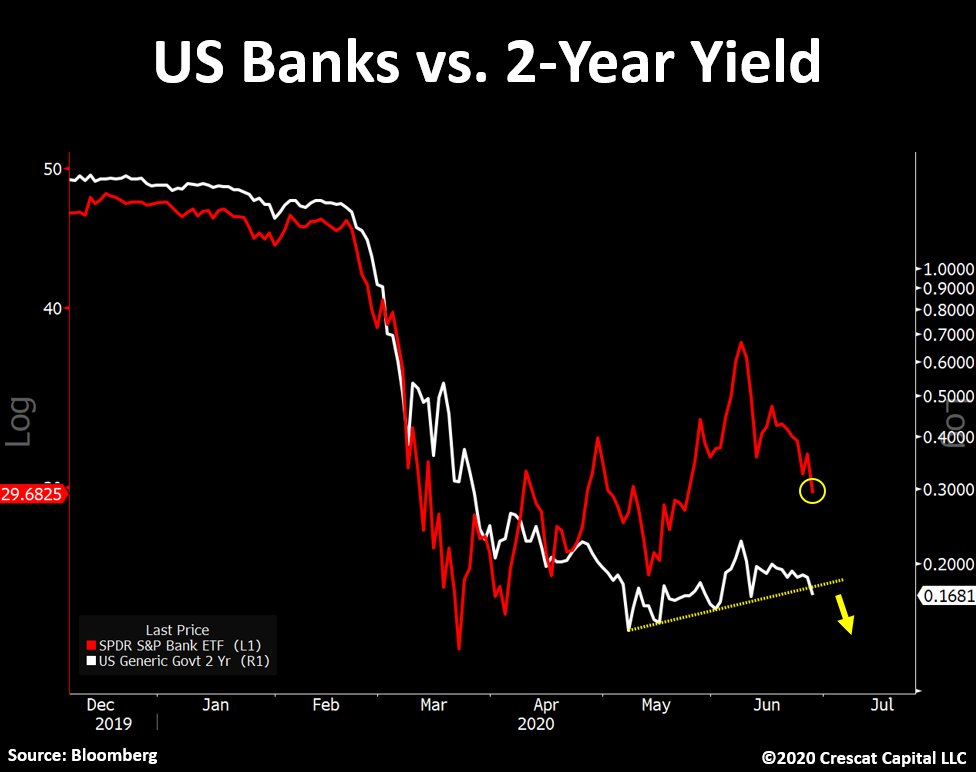
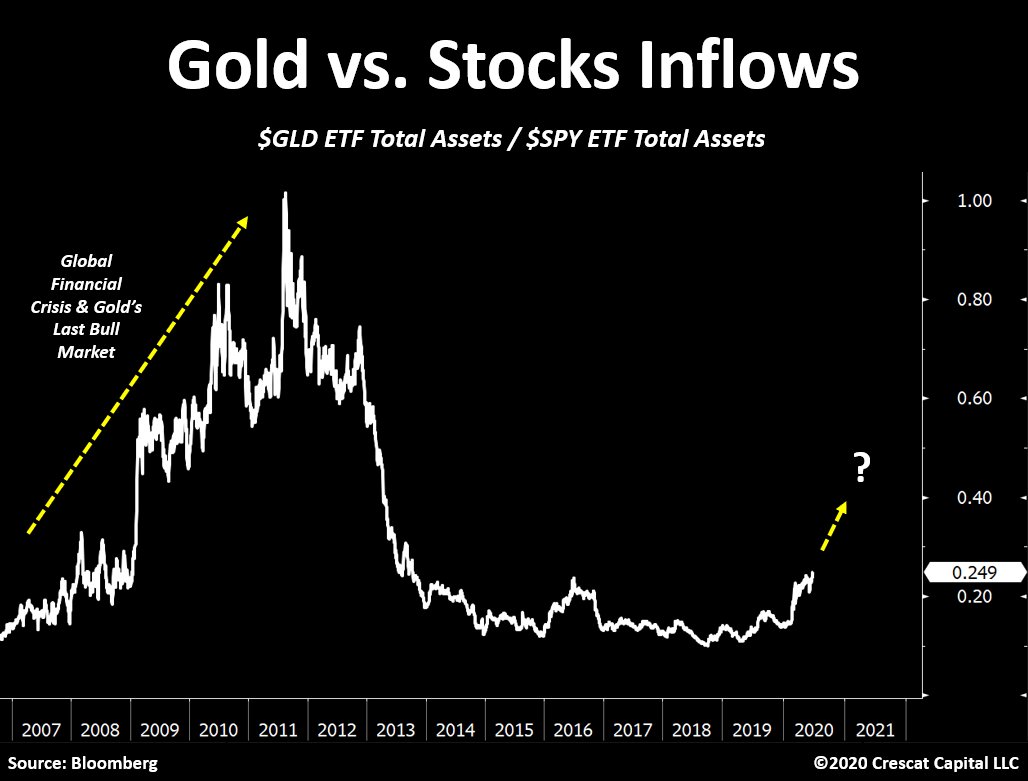
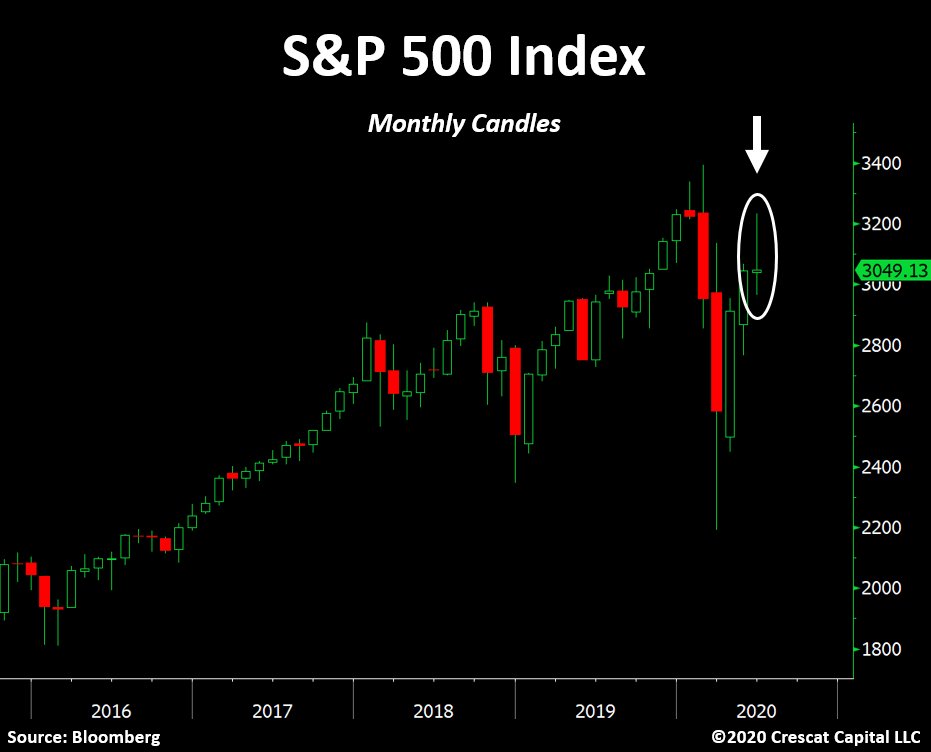
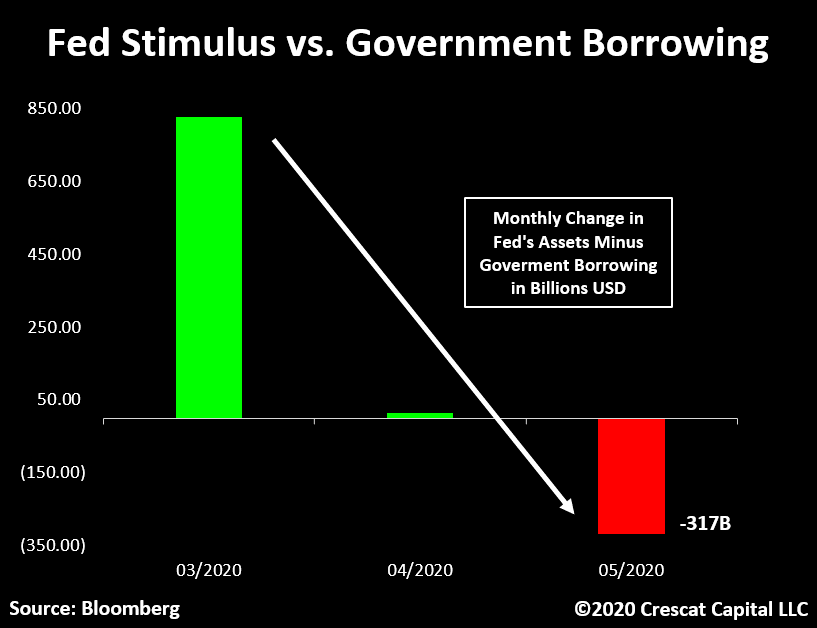
5- Acceptance: JPM coin, RMB coin, government reversals
I mean you can’t blame governments, these are the stages of grief after all, and governments are made up of humans like you and me. When a long-term CEO is suddenly ousted, he/she has to get used to a new life and role that is different from his/her past, to find a new role that is mutually beneficial and relevant to the present. The former CEO may feel lost at first, but the more he/she focuses on finding a new position, the quicker that feeling will subside . Now governments need to do the same, they still have a meaningful role, they’re just abdicating some of their control.
Governments will be pitching us tenders, not the other way around. They will attempt to attract the best talent, highest capital, and hottest new technologies to their jurisdictions. Similar to how Republic allows the crowds to choose what businesses/assets get funded (and in turn share in the profits), the crowds will be choosing what governments get funded (and in turn will share in the profits). Every citizen will be a global citizen.
Politics as we know it today will change its identity, and considering the current state of affairs, the journey to change has accelerated. People will always want to feel a part of something though. Just look at sports fans. When a team wins, the fans at home say, “WE won”, even though they did not technically contribute much to the result. People always want a “we” lest they feel alone in this large and mysterious life. A sense of belonging to a group is human nature. So politics may not be completely taken out of the equation, it will more likely evolve into a more distributed, truly representative and effective process via the internet.
Today we rely on telecoms, ISPs, and the government to connect to the internet. But Elon Musk’s Starlink ambitions could change that. With 540 satellites already launched, and thousands more planned over the next couple of years, Starlink will provide cheaper and faster internet to the entire globe. It drew a line for this new country’s borders, a line that wraps around planet Earth.
We’ve been given freedom beyond our historical and physical constraints. Now all that limits us will be our own minds. Minds that governments have to compete for, and in a competition, the customer usually benefits. This freedom comes at the cost of government insurance and protection though, meaning both the people and the governments will be better rewarded and charged based on their actual contributions and demands. The people, corporations, and governments will coexist together under a new partnership, the new PPP may stand for People of Planet Earth for Progress.
The distributed creation of wealth rather than the centralized distribution of wealth will be the standard. This, is the new republic.
“The most common way people give up their power is by thinking they don’t have any.”
Alice Walker
Get ready for the unraveling of a new world.
 Anwaar's Chronicles of Corona